Customer portal development: Have a customer portal created
You want a Develop customer portal or Have a customer portal created? Here you will find the short answer to costs, functionality and choice of provider - compact for B2B decision-makers.
Short answer: Customer portal costs & effort
Ein Have customer portal developed usually costs between 25,000 and 150,000 euros - dependent on roles, integrations and security requirements. An MVP is often in 8-12 weeks possible, complex portals require several months.
- Basic portal: 25.000-35.000 €
- B2B portal with integrations: 60.000-100.000 €
- Complex platform: 100.000-150.000 €+
What is a customer portal and when is it worthwhile to develop it yourself?
Ein Customer portal is the central self-service for customers: documents, orders, tickets, status, contracts - 24/7, web-based and optionally as an app. A good portal forms Concrete business processes from (onboarding, releases, support, reporting) and reduces manual effort.
Ein Have your own customer portal developed is particularly worthwhile if:
- Processes still running via email/Excel,
- Customer data is scattered across multiple systems,
- Support requests should be reduced,
- Standard solutions do not clearly map your processes.
Goals & Business Case: Why have a customer portal developed?
Typical effects of a well-planned customer portal:
- Less support effort: Self-service instead of email ping-pong.
- Faster throughput times: digital releases and processes.
- Better customer experience: a central access instead of a tool mix.
- More transparency: Status, documents, history at any time.
Get the first cost estimate for your customer portal in 3 minutes, without registration. Calculate customer portal costs now
Typical functions of a customer portal
The specific range of functions depends heavily on the industry and target group. Frequently recurring modules are:
- User Accounts & Authentication: Secure login with SSO/OAuth2, optional two-factor authentication.
- Roles & Rights: Different views for administrators, clerks, management and end customers.
- Document management: Call up contracts, invoices, offers, protocols, service reports centrally.
- Self-service features: Change master data, manage products, book or cancel services.
- Service & Support: Tickets, inquiries, chat or integrated knowledge base.
- Notifications & Emails: Automatic updates about status changes, new documents or deadlines.
- Payments & Contracts: Payment history, open items, digital contract conclusions.
- Analysis & Dashboards: Overviews of usage, orders, consumption or KPIs.
Come often in the B2B environment multi-stage release processes, Multi-tenancy and Integrations into ERP, CRM or DMS added.
Do you want to find out which modules your customer portal really needs? Start customer portal configurator
Customer portals by industry: practical examples
Ein Customer portal developed can have very different characteristics depending on the industry:
- Insurance & Finance: Contract overview, damage reports, contract changes, document archive.
- Industry & B2B: Service portals for machines, order histories, spare parts catalogs, maintenance appointments.
- Energy supplier: Consumption data, meter readings, tariff changes, invoices.
- Healthcare: Patient portals, appointment booking, findings, secure communication.
- Housing industry & real estate: Tenant portals, damage reports, utility bills.
- Public administration: Citizen portals, application routes, digital notifications, identification via eID/BundID.
Depending on the target group, we combine industry-specific building blocks with reusable components. This shortens development time and reduces costs without sacrificing individuality.
Architecture of a modern customer portal
A professional customer portal not a monolith: clear layers, clean interfaces, scalable operation.
Frontend: web & optional app
Web portal (e.g. Vue/Angular) and optionally app (e.g. Flutter). What is crucial is a consistent UX across all devices.
Backend & technical logic
API backend (e.g. Micronaut/Spring Boot) controls processes, roles and data flows.
Authentication & Role Model
SSO, OAuth2/OpenID and a clear role model (e.g. Keycloak) are mandatory.
Interfaces to ERP, CRM & DMS
Typical integrations:
- ERP: Orders, invoices, delivery status
- CRM: Master data, histories
- DMS: Documents, audit-proof storage
Target: new systems later without complete conversion connect.
Your system landscape is complex?
We check for free how a customer portal can be integrated.
Free architecture consultation
CodeGuides project configurator
Use the international project configurator to estimate a realistic budget and delivery range before booking a consultation.
Process: How to have a customer portal developed
The path to your own customer portal follows a clearly structured procedure. A typical process at CodeGuides:
1. Strategy & requirements analysis
Together we clarify:
- Target groups, processes, integrations
- Security & Compliance
Result: clear scope plus rough effort and cost estimate.
2. UX/UI Design & Prototyping
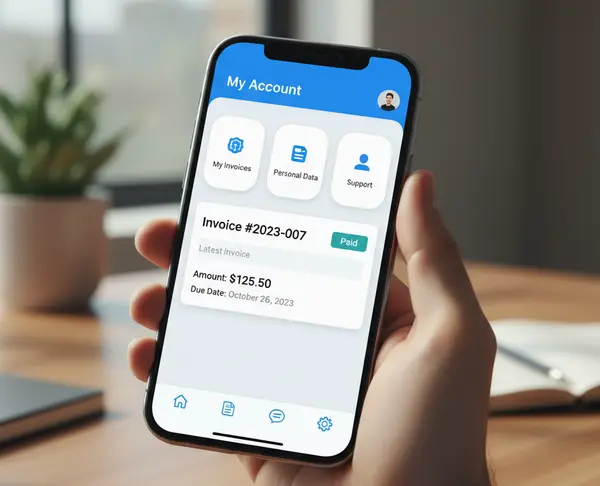
User-friendliness is crucial. Our UX/UI designers create clickable prototypes for:
- Core use cases and roles
- Early feedback from departments & management
3. Technical architecture & implementation
Frontend, backend and interfaces are implemented modularly, tests and CI/CD ensure maintainability.
4. Testing, piloting & rollout
Before the rollout, a Pilot group started to:
- Collect feedback
- Performance to check
This is followed by the broad rollout including training and support concept.
Would you like to estimate the effort for your customer portal more specifically? Roughly calculate the project
Have a standard solution developed vs. your own customer portal
Many companies are initially faced with the central question: Use a standard customer portal or have your own customer portal developed? Both approaches have clear advantages and disadvantages and the right decision often saves six-figure amounts.
Standard solution (“Buy”)
Standard portals are preconfigured SaaS solutions with a fixed range of functions. They are particularly suitable if:
- Your processes are largely standardized,
- You want to get started quickly,
- few integrations are necessary.
Typical advantages:
- Quick start (1-6 weeks)
- Low initial investment
- Finished standard modules
Disadvantages:
- Process adapts to the tool
- Limited customization
- Vendor lock-in & ongoing licenses
Own customer portal (“Make”)
An individually developed customer portal is worthwhile if:
- Processes are complex or company-specific,
- Several systems need to be integrated,
- You need scaling and data sovereignty.
Typical advantages:
- Customized processes & roles
- No SaaS dependency
- Clean integration into your system landscape
Disadvantages:
- Higher initial budget
- Clear product responsibility necessary
In practice this often results in a hybrid approach: certain modules (e.g. authentication or document management) are chosen as a standard solution, while the actual customer portal is developed individually. This reduces development costs and gives you maximum flexibility.
Short comparison: standard solution vs. in-house development
| Criterion | Standard solution | Own customer portal |
|---|---|---|
| Investment | low starting price, ongoing license costs | Higher initial budget, often cheaper in the long term |
| Flexibility | severely limited | full individualization of the processes |
| Integrations | often limited to standard interfaces | can be flexibly integrated into ERP/CRM/DMS |
| Processes | Tool determines process | Process determines tool |
| Data sovereignty | often split/restricted | full control over data & infrastructure |
Unsure which option makes sense for you? Calculate a non-binding cost comparison
Customer portal costs: How much does a customer portal cost?
Die Costs for a customer portal depend on scope, integrations and security. Rough orientation:
- Basic customer portal (login, documents, simple self-services): approx. 25,000-35,000 euros
- B2B customer portal with roles, multiple modules, ERP connection: approx. 60,000-100,000 euros
- Complex platform with multi-tenancy, multilingual capability, multiple integrations: 100,000-150,000 euros and above
Quick check: How much would your customer portal approximately cost? Calculate costs now
Customer portal provider: How do you choose correct agency?
A customer portal is complex (processes, roles, security, UX, DevOps). What is crucial is one interdisciplinary team, not just developers.
Checklist: These criteria determine success or failure
- Architecture expertise: Can the provider clearly explain how it structures role models, interfaces, multi-client capability and modules?
- Experience with customer portals: At least 2-3 realized portals, not just “websites with login”.
- Integration competence: Experience with ERP, CRM, DMS, SSO, SFTP, OAuth2, Keycloak etc.
- UX processes: Is there prototyping, user feedback, testing?
- DevOps & Operations: Containerization (Docker), CI/CD, monitoring (Grafana), security processes.
- Transparent calculation: Clear effort blocks, milestones, acceptance points.
- In-house team vs. outsourcing: Long outsourcing chains are a high risk for critical portals.
Why CodeGuides?
We bundle UX, backend, frontend, app development, DevOps and operations in a well-coordinated team and have already done so for medium-sized businesses and corporations complex customer portals end-to-end implemented, including architecture, interfaces, operation & further development.
We would be happy to have a short conversation to see whether we are a good fit for your project: Arrange a free initial consultation.
Introduction & Documentation
A customer portal is also change management. Clean documentation and a clear rollout determine adoption and support burden.
- Architecture & API documentation (Modules, data flows)
- Role & authorization model
- Monitoring/Alerting and operational handover
- Pilot group + Rollout plan
This increases the usage rate and reduces support costs.
We will show you what an introduction in your company could look like. Arrange initial consultation
Practical example: Service platform for booking training appointments
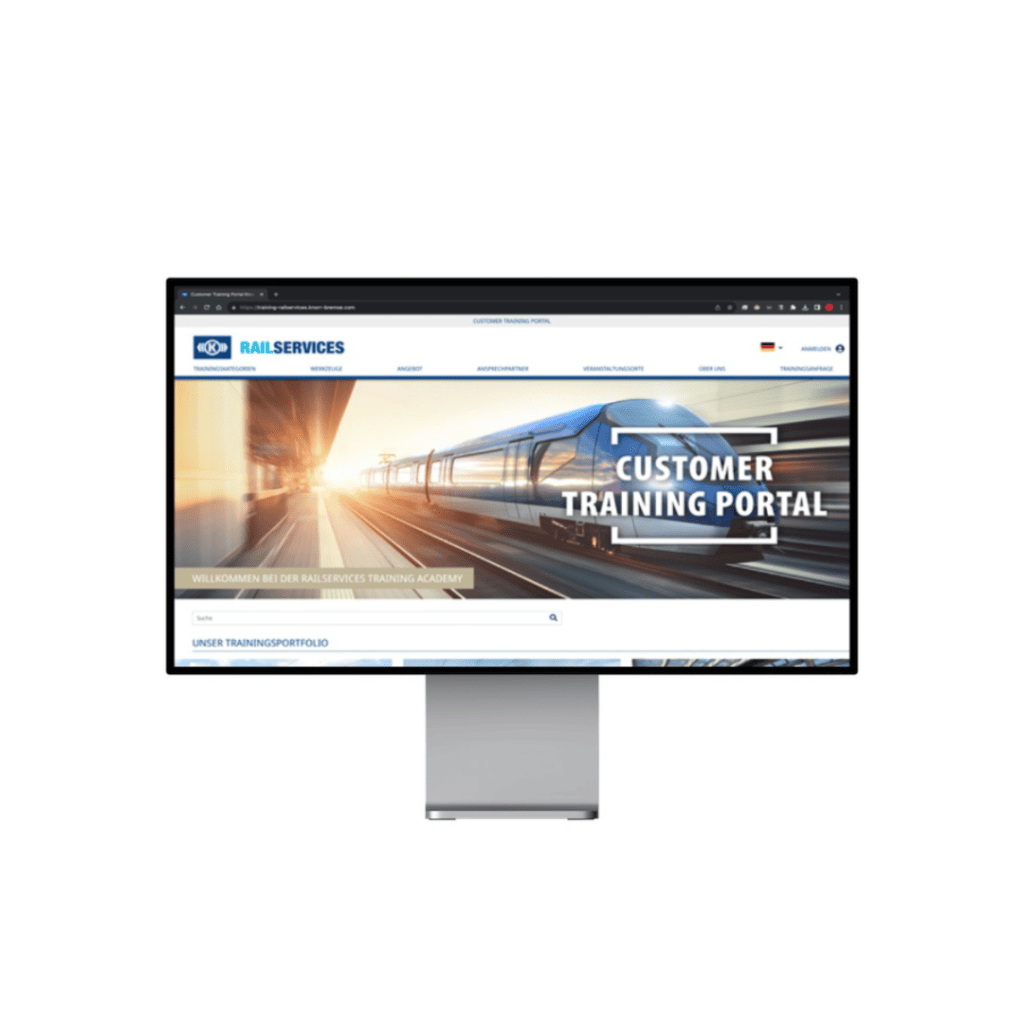
Webplattform für ein DAX-Unternehmen zur zentralen Verwaltung von Schulungsangeboten und Einsatzplanung. Ergebnis: >80% less manual email communication, continuous development in operations.
Practical example: B2B customer portal for spare parts orders
B2B customer portal for mechanical engineering: Dealers and service partners order spare parts, upload documentation and submit service reports.
- Integration into SAP for items, prices & availabilities
- Role model for dealers, technicians & customers
- Automatic document provision (e.g. manuals, maintenance plans)
- Shopping cart, order releases & approval workflow
- Machine history per customer
Result: 35% fewer support tickets, 50% faster processing time and complete transparency for partners & customers.
Conclusion: Having a customer portal developed is a strategic project
Ein Own customer portal is much more than an IT system, it is the digital interface to your customers. Properly planned and implemented, it increases efficiency, transparency and customer satisfaction and becomes a real competitive advantage.
If you have a Have customer portal developed want to arrange a free initial consultation or calculate an initial cost range with our Project configurator. In the next step, we can check together what your architecture could look like and which modules are suitable for an MVP.

CodeGuides is your partner for professional software development.
FAQ: Frequently asked questions about customer portal development
Customer portal costs: How much does a customer portal cost?
Customer portal costs usually start at 25.000-35.000 € (Login/SSO, roles, documents). Projects often come with integrations, workflows and multilingualism 60.000-150.000 €. This provides an initial assessment Configurator.
How long does customer portal development take?
An MVP usually takes time 8-12 weeks. Require extensive portals with multiple integrations 3-6 months, depending on interfaces, data quality and decision-making processes.
Have a customer portal developed vs standard solution?
Standard solutions start quickly, but have their limits when it comes to individual processes. Your own customer portal offers flexibility and data sovereignty, but costs more initially. Often makes sense: Hybrid - standard modules plus individual core processes.
Customer portal technologies: Which ones are suitable?
Typical: frontend Vue.js or Angular, backend Micronaut or Spring Boot, Auth via Keycloak (OAuth2/OpenID). Hosting mostly containerized with Docker/Kubernetes on EU servers.
Customer portal hosting Germany: Is that possible?
Yes. Hosting on German or EU servers is standard to meet GDPR requirements. This means you retain full control over customer data and compliance.
Discuss your idea in a free 45-minute conversation, without obligation and at eye level.
CodeGuides: Proven for medium-sized businesses and corporations









Discuss your project with us
Choose a suitable date and we will send you an invitation. We look forward to exchanging ideas with you.
Choose channel
All consultations are held via Google Meet.
Date & time
Confirmation and calendar entry arrive immediately by email.
The appointment can be rescheduled if needed.
Summary
I look forward to our consultation