Delivery app development: Modern solutions for delivery services, logistics and e-commerce
Whether you’re delivering groceries, parcels, or restaurant orders, or managing same-day logistics, a high-quality delivery app can improve efficiency, the customer experience, and your competitive edge. That’s why more companies are looking to develop a delivery app tailored to their business processes. This guide covers the key features, the development process, and realistic costs.
Why companies build delivery apps
Delivery processes are getting faster, more complex, and more data-driven. Customers expect real-time updates, accurate delivery times, and a simple ordering process. Meanwhile, businesses need greater efficiency, less paperwork, and more automation. A custom delivery app can address these challenges by bringing processes together in one digital system.
- Faster and more reliable deliveries
- Real-time communication between drivers, customers, and dispatchers
- Fewer errors through automated workflows
- Less manual process steps
- Higher customer satisfaction and more sales
- Better utilization of drivers and delivery resources
Types of delivery apps
Delivery apps come in many forms. Depending on the industry, they may include:
- Courier Apps: Pickup, delivery, tracking, route optimization
- Restaurant Delivery Apps: Order management, driver tracking, and customer updates
- Grocery delivery apps: Shopping cart, checkout, and live tracking
- Logistics and freight: Route planning, barcode scanning, and shipment status
- Same Day and Last Mile Delivery: Ultra-fast delivery with real-time data
Key features of a delivery app
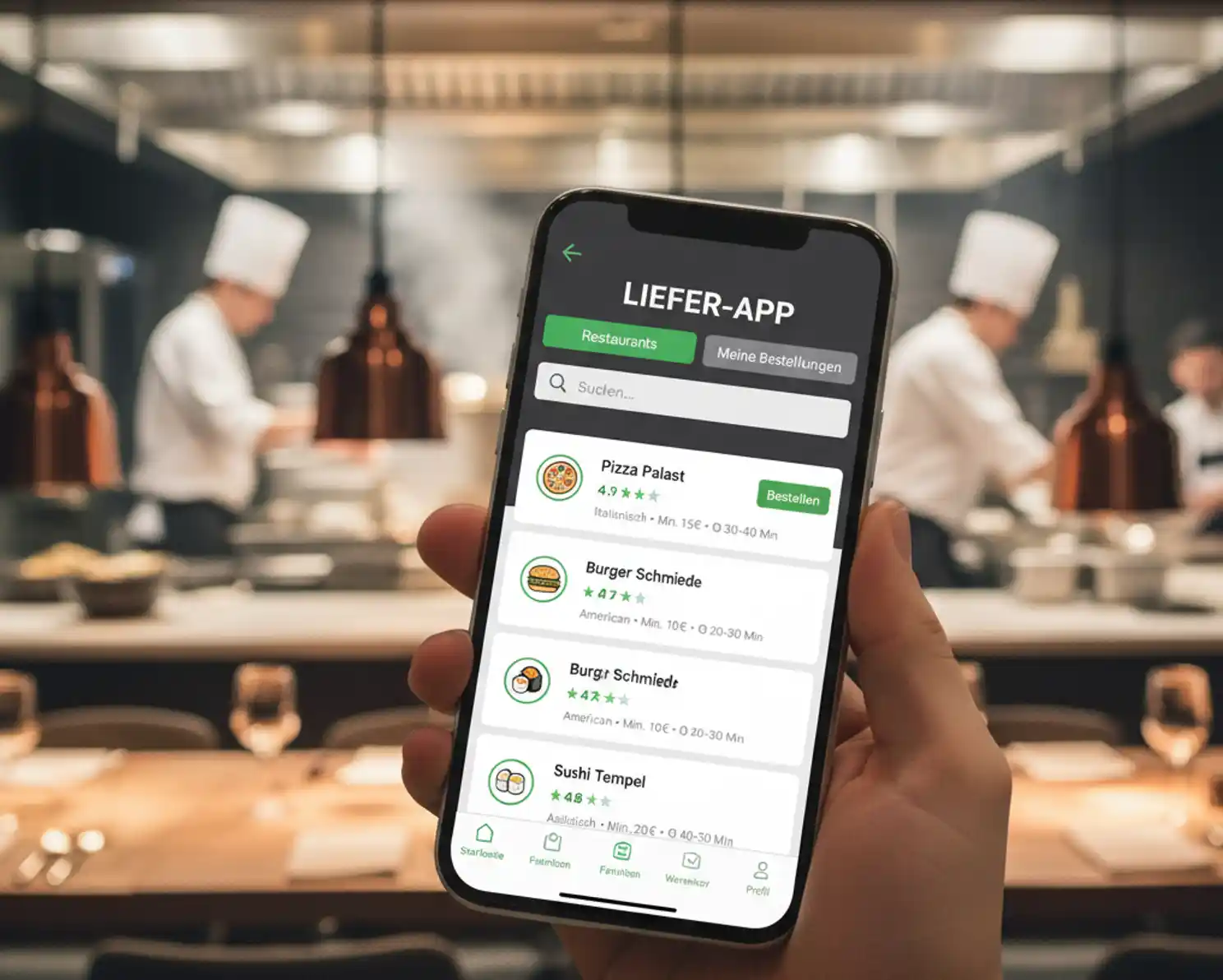
Modern delivery apps typically include three components: a customer app, a driver app, and an admin system. Key features include:
Customer app
- Order placement
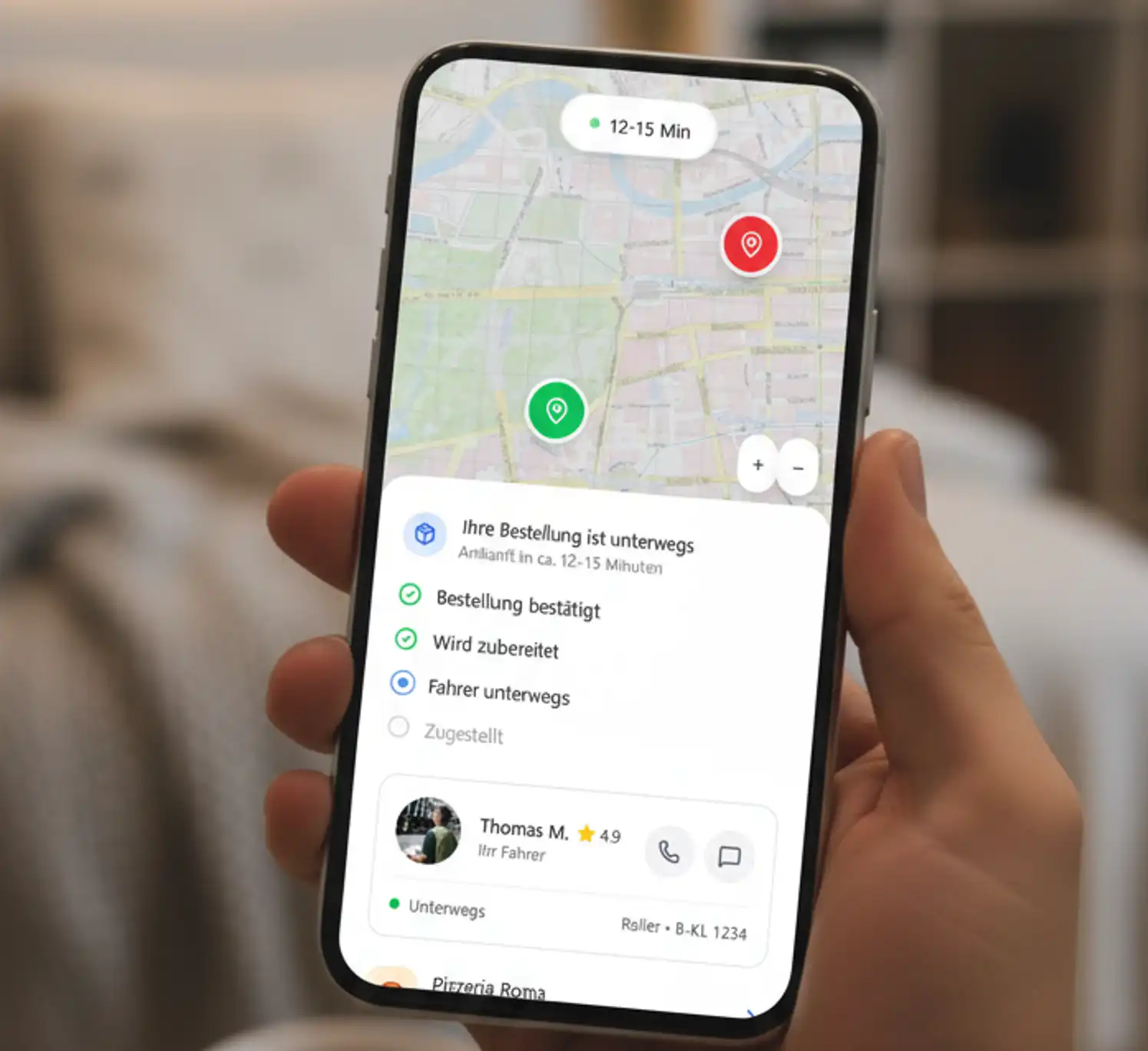
- Real-time delivery tracking
- Push notifications
- Payment (credit card, PayPal, Apple Pay)
- Rating system
- Address book and order history
Driver App
- Route planning and navigation
- Order details and prioritization
- Status updates: picked up, on the way, and delivered
- Digital signatures or photo documentation
- Barcode scanning
- Breaks, idle time, and work hours tracking
Admin backend
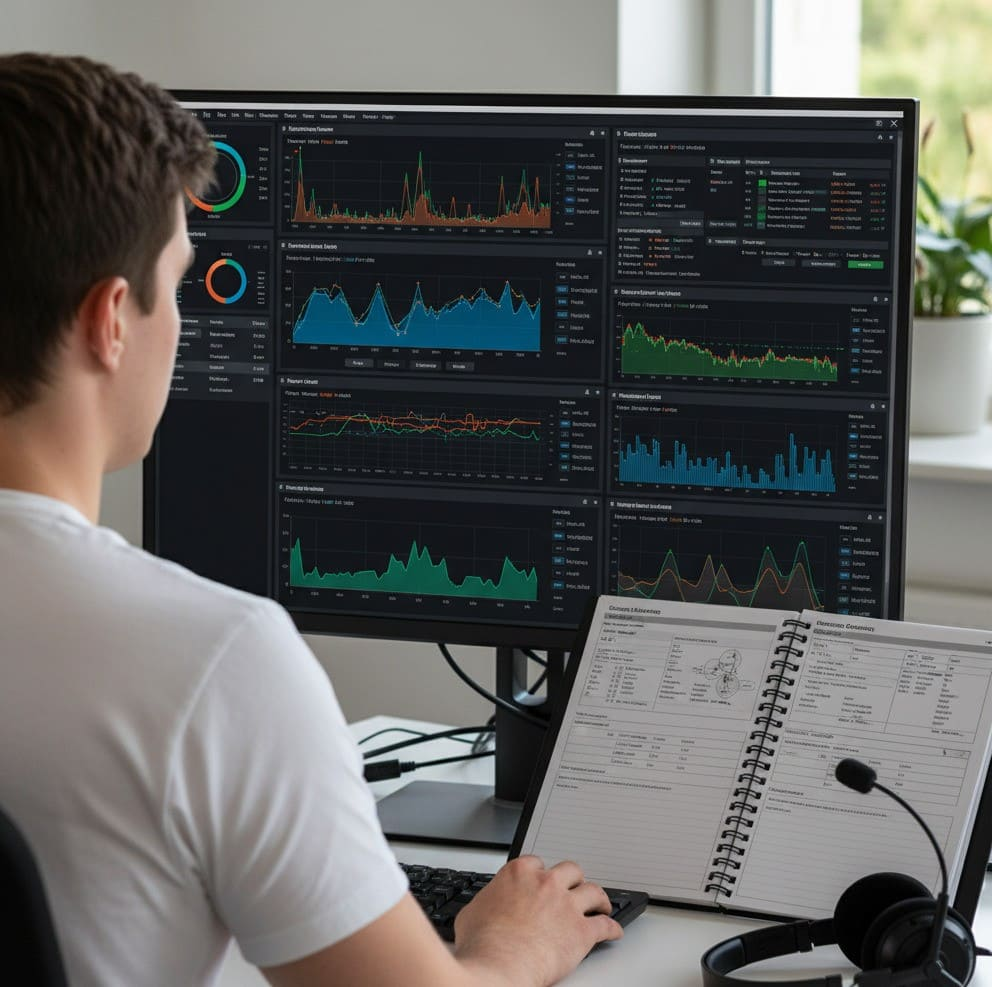
- Dashboard for real-time visibility and monitoring
- Route planning and scheduling
- Customer management
- Route optimization
- Reports and KPI tracking
- Interfaces to ERP, CRM or warehouse management
Why a custom delivery app is better than an off-the-shelf solution
Off-the-shelf solutions are quick to deploy, but rarely offer the flexibility modern delivery services need. A custom app can be tailored to your workflows. Benefits include:
- No unnecessary functions
- Perfect integration into existing systems
- Scalability as you grow
- Full control over data and processes
- Individual branding and user experience
- Better performance and higher reliability
How much does it costto develop a delivery app
Costs depend largely on the scope and complexity of the app. Here’s a realistic guide:
- Small delivery app for a single location: €25,000 to €50,000
- Mid-sized delivery app with a driver app and admin area: €50,000 to €100,000
- Complex platform with live tracking, route optimization and payment system: €80,000 to €160,000
With the App cost calculator Get an initial estimate in just a few minutes.
The delivery app development process
We develop delivery apps through a clearly structured process:
- Analysis and strategy: Goals, processes, roles and requirements
- UX/UI Design: User-friendly design for customers and drivers
- Prototyping: Clickable prototype for review
- Development: Mobile app, backend, integrations, and push notifications
- Testing: Stability, performance, security
- Deployment: App Store submission and server setup
- Operation and further development: Updates, maintenance, analysis
CodeGuides project configurator
Use our project configurator to estimate a realistic budget and timeline before booking a consultation.
Technologies for modern delivery apps
- Mobile Apps: Flutter for iOS and Android
- Backend: Spring Boot, Micronaut, Node.js
- APIs and tracking: Firebase, Google Maps Platform, GPS Services
- Payment methods: Stripe, PayPal, Apple Pay
- Hosting and infrastructure: Docker, Kubernetes, GitLab CI
- Monitoring: Grafana, Prometheus, Sentry
FAQ: Frequently asked questions about developing a delivery app
How much does a delivery app cost
A delivery app costs between €25,000 and €160,000. Small apps start at €25,000, while complex platforms cost significantly more. The App cost calculator provides an initial estimate.
Can a delivery app manage multiple drivers at once?
Yes. Modern delivery apps can support any number of drivers and vehicles, with features such as role management, driver tracking, and resource management.
Is Flutter suitable for delivery apps
Flutter is well suited to delivery apps, offering high performance, offline functionality, and smooth GPS tracking. A single codebase can also be used for both iOS and Android.
Does a delivery app need live tracking?
Live tracking isn’t essential, but it’s a key advantage for courier services, food service, and same-day delivery. It lets customers and dispatchers see where a delivery is at any time, helping improve service quality and efficiency.
Conclusion: A professional delivery app can make your business more efficient and more customer-focused
A modern delivery app improves workflows, reduces costs, and creates a better customer experience. Whether you’re in food service, retail, or logistics, a custom app can make your business more independent, scalable, and competitive. With the right features and professional development, you can build a platform that continually improves your operations.
If you want a Delivery app development , arrange a free initial consultation or create an initial cost estimate with the App cost calculator.

CodeGuides is your partner for professional software development.
Discuss your idea in a free, no-obligation 45-minute conversation with our team.
CodeGuides: proven with mid-sized companies and enterprises








Discuss your project with us
Choose a time that works for you, and we’ll send an invitation. We look forward to speaking with you.
Choose channel
All consultations take place on Google Meet.
Date & time
Your confirmation and calendar invitation will arrive by email right away.
The appointment can be rescheduled if needed.
Summary
I look forward to our consultation